Introduction
In the dynamic world of cryptocurrency, Ethereum (ETH) stands as one of the most closely monitored digital assets, second only to Bitcoin. For traders, investors, and enthusiasts, tracking its price movement in real-time is crucial for making informed decisions. Among the most essential tools for this purpose is the real-time K-line chart (also known as a candlestick chart), which provides a visual representation of price fluctuations over time. This article explores how to interpret Ethereum’s live K-line charts, their key components, and where to access reliable real-time data for ETH/USD and other trading pairs.
What Is a K-line Chart
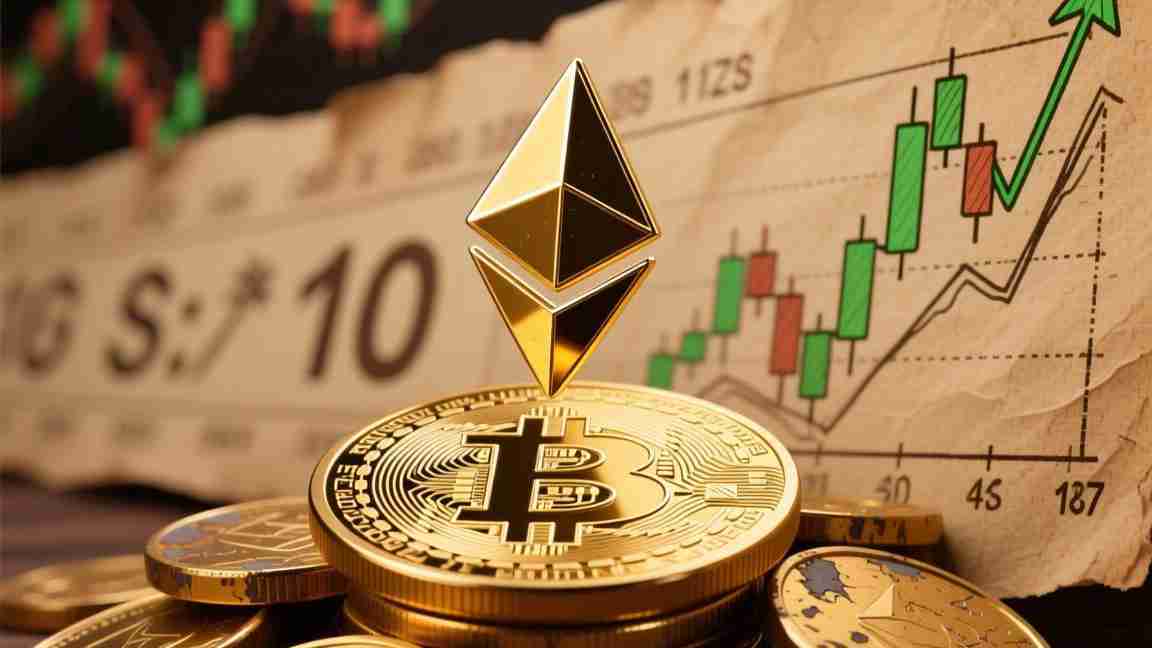
A K-line chart, or candlestick chart, is a popular financial tool used to analyze price movements of assets like Ethereum. Each "candle" on the chart represents a specific time frame (e.g., 1 minute, 1 hour, 1 day) and displays four critical price points:
- Open: The price at which ETH trades at the beginning of the time frame.
- Close: The price at which ETH trades at the end of the time frame.
- High: The highest price ETH reached during the time frame.
- Low: The lowest price ETH fell to during the time frame.
The body of the candle is colored (typically green or white for a "bullish" candle, indicating the price closed higher than it opened, and red or black for a "bearish" candle, indicating the price closed lower). Thin lines, called "wicks" or "shadows," extend from the top and bottom of the body, representing the high and low prices within the period.
Key Features of Real-time Ethereum K-line Charts
Real-time K-line charts for Ethereum offer several critical features for traders:
Multiple Time Frames
Traders can switch between different time frames (e.g., 5m, 15m, 1h, 4h, 1d, 1w) to analyze short-term volatility or long-term trends. For example, a day trader might focus on 1-hour or 15-minute charts, while a long-term i
Technical Indicators
Most platforms overlay technical indicators on K-line charts to enhance analysis. Common indicators include:
- Moving Averages (MA/EMA): Smooth out price trends to identify support/resistance levels.
- Relative Strength Index (RSI): Measures overbought or oversold conditions.
- MACD (Moving Average Convergence Divergence): Tracks momentum and trend changes.
- Bollinger Bands: Volatility bands that indicate potential price breakouts or reversals.
Volume Analysis
Volume bars below the K-line chart show the trading activity for each time frame. High volume during a price surge (green candle) confirms strong buying interest, while high volume during a price drop (red candle) indicates intense selling pressure.
Real-time Price Updates
Live K-line charts update instantly as ETH’s price changes, ensuring traders have the most current data. This is vital for executing trades at optimal entry/exit points, especially in volatile markets.
Where to Access Real-time Ethereum K-line Charts
Several reputable platforms offer free and paid real-time K-line charts for Ethereum:
Cryptocurrency Exchanges
Major exchanges like Binance, Coinbase Pro, Kraken, and OKX provide built-in K-line charting tools with real-time ETH/USD, ETH/BTC, and other pair data. These charts are often integrated with direct trading interfaces, allowing seamless order placement.
Financial Data Websites
- TradingView: A leading platform for technical analysis, offering advanced charting tools, customizable indicators, and real-time data from hundreds of exchanges.
- CoinMarketCap and CoinGecko: These popular crypto data aggregators display live K-line charts alongside market cap, volume, and historical price data.
- Yahoo Finance and Google Finance: While focused on traditional assets, they also provide real-time ETH/USD charts with basic technical indicators.
Mobile Apps
For traders on the go, apps like Coinbase, Binance, and TradingView offer mobile-optimized K-line charts with push notifications for price alerts.
Interpreting Ethereum’s K-line Charts: A Quick Guide
- Bullish Signals: A series of green candles with higher highs and higher lows suggests an uptrend. Look for bullish candlestick patterns (e.g., "hammer," "engulfing") combined with rising volume.
- Bearish Signals: Red candles with lower highs and lower lows indicate a downtrend. Bearish patterns (e.g., "shooting star," "dark cloud cover") with high volume may signal further declines.
- Support and Resistance: Horizontal lines on the chart mark price levels where ETH has historically reversed direction. Buying near support and selling near resistance is a common strategy.
Conclusion
Real-time Ethereum K-line charts are indispensable tools for anyone analyzing or trading ETH. By understanding candlestick patterns, technical indicators, and volume trends, traders can gain valuable insights into market sentiment and make data-driven decisions. Whether you’re a short-term trader or a long-term holder, accessing reliable, up-to-the-minute K-line data is key to navigating the fast-paced cryptocurrency market.
For the latest ETH price action and live K-line updates, trusted platforms like TradingView, Binance, and CoinMarketCap remain top choices for traders worldwide. Stay informed, stay strategic, and leverage the power of real-time charts to optimize your Ethereum trading journey.